
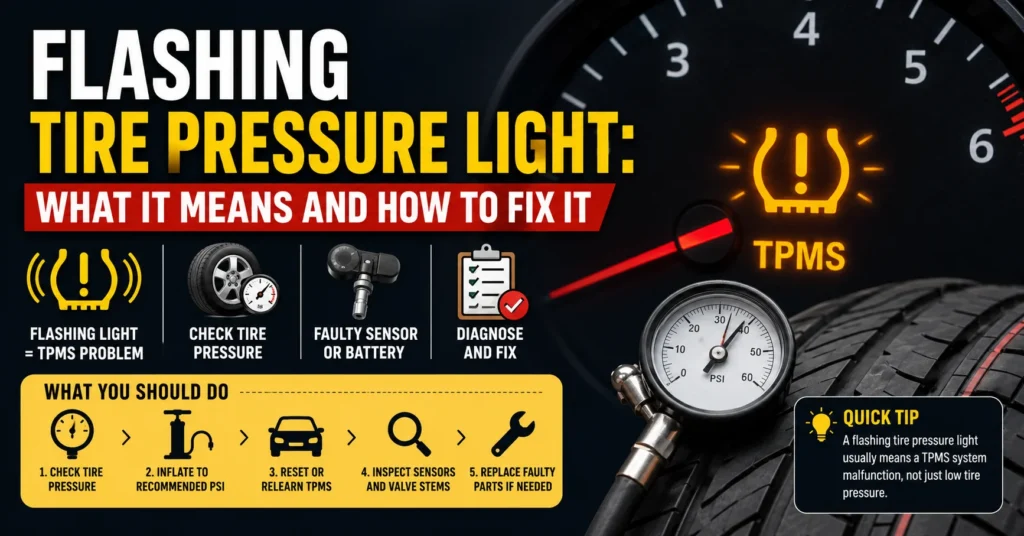
A flashing tire pressure light can be alarming, especially if it appears while you’re driving. Many drivers assume it simply means one of the tires is low on air, but a flashing tire pressure warning often indicates something more serious. Understanding what this warning means can help you avoid safety risks, improve fuel efficiency, and prevent costly repairs.
Modern vehicles are equipped with Tire Pressure Monitoring Systems (TPMS) designed to alert drivers when tire pressure falls outside the recommended range. While a solid tire pressure light usually points to low tire pressure, a flashing tire pressure light often signals a problem with the TPMS itself.
we’ll explain what a flashing tire pressure light means, the most common causes, how to diagnose the issue, and the steps you can take to fix it.
ALSO READ: Square Face Generator: Create Perfect Face Shapes Online
What Is A Flashing Tire Pressure Light?
A flashing tire pressure light is part of your vehicle’s Tire Pressure Monitoring System (TPMS). This system continuously monitors the air pressure inside your tires and alerts you when a problem is detected.
In most vehicles:
- A solid tire pressure light means one or more tires have low pressure.
- A flashing tire pressure light typically indicates a malfunction within the TPMS system.
The warning light may flash for 60 to 90 seconds after starting the vehicle and then remain illuminated. This behavior usually means the system has detected a fault and requires attention.
How The TPMS System Works
Before diagnosing the problem, it helps to understand how TPMS works.
Direct TPMS
Direct TPMS uses pressure sensors mounted inside each wheel. These sensors transmit tire pressure information to the vehicle’s computer.
Advantages include:
- Highly accurate readings
- Real-time pressure monitoring
- Quick detection of pressure loss
Indirect TPMS
Indirect TPMS uses wheel speed sensors from the ABS system rather than dedicated pressure sensors.
Advantages include:
- Lower maintenance costs
- No battery-powered sensors
However, indirect systems are generally less precise than direct TPMS systems.
Common Causes Of A Flashing Tire Pressure Light
Several issues can trigger a flashing tire pressure light.
Dead TPMS Sensor Battery
One of the most common causes is a dead sensor battery.
Most TPMS sensors contain sealed batteries that typically last:
- 5 to 10 years
- Approximately 100,000 miles of driving
Once the battery dies, the sensor can no longer communicate with the vehicle’s computer.
Signs include:
- Flashing warning light
- Inconsistent pressure readings
- Missing tire pressure data
Faulty TPMS Sensor
Sensors can fail due to:
- Impact damage
- Corrosion
- Manufacturing defects
- Excessive heat exposure
A damaged sensor often causes the tire pressure light to flash even when tire pressures are correct.
Recent Tire Service
If you’ve recently:
- Rotated tires
- Replaced tires
- Installed new wheels
- Performed tire balancing
The TPMS may need recalibration or relearning.
Some vehicles require a TPMS reset after tire service.
Extreme Weather Changes
Temperature changes significantly affect tire pressure.
For every 10°F drop in temperature, tires can lose approximately 1 PSI.
Cold weather can cause:
- Low tire pressure
- Sensor communication issues
- Temporary TPMS warnings
Damaged Valve Stem
In many vehicles, the TPMS sensor is integrated into the valve stem.
Damage caused by:
- Road debris
- Corrosion
- Improper tire service
can lead to sensor failure.
Electrical Problems
Sometimes the issue isn’t the tire or sensor itself.
Electrical problems may include:
- Faulty wiring
- Control module failures
- Software glitches
- Antenna communication issues
These problems often require professional diagnosis.
What Happens If You Ignore A Flashing Tire Pressure Light?
Ignoring the warning can create several risks.
Reduced Safety
Improper tire pressure affects:
- Braking distance
- Steering response
- Vehicle stability
Underinflated tires are more prone to blowouts.
Increased Tire Wear
Uneven tire pressure causes tires to wear prematurely.
This may lead to:
- Shortened tire lifespan
- Uneven tread wear
- More frequent tire replacements
Lower Fuel Efficiency
Underinflated tires create greater rolling resistance.
As a result:
- The engine works harder
- Fuel consumption increases
- Operating costs rise
Missed Tire Problems
A malfunctioning TPMS means you may not receive future warnings about genuinely low tire pressure.
How To Check Your Tire Pressure
The first step when you see a flashing tire pressure light is checking all tires manually.
Park Safely
Park the vehicle on a level surface and allow tires to cool for accurate readings.
Locate Recommended Pressure
Check:
- Driver’s door jamb sticker
- Vehicle owner’s manual
Do not rely on the maximum PSI listed on the tire sidewall.
Use a Tire Pressure Gauge
Remove the valve cap and press the gauge firmly onto the valve stem.
Record the reading for each tire.
Inflate If Necessary
Add air until each tire reaches the manufacturer’s recommended pressure.
Recheck the Warning Light
Restart the vehicle and observe whether the warning light disappears.
If the light continues flashing, the issue likely involves the TPMS system itself.
How To Fix A Flashing Tire Pressure Light
The proper solution depends on the root cause.
Reset the TPMS System
Many vehicles have a TPMS reset procedure.
Common methods include:
Inflate all tires correctly.
Turn the ignition on.
Press and hold the TPMS reset button.
Wait until the warning light blinks several times.
Drive the vehicle for several miles.
Always consult the owner’s manual for vehicle-specific instructions.
Relearn the Sensors
Some vehicles require sensor relearning after:
- Tire rotation
- Sensor replacement
- Wheel replacement
The relearn process may involve:
- Special scan tools
- Dashboard menus
- Specific driving procedures
Replace Faulty Sensors
If a sensor battery has failed, replacement is usually necessary.
Since most sensor batteries are sealed:
- Batteries cannot typically be replaced separately.
- The entire sensor unit must be replaced.
Repair Valve Stem Damage
If the valve stem is damaged:
- Replace the valve stem assembly.
- Ensure compatibility with the TPMS sensor.
Update Vehicle Software
In rare cases, software updates can resolve communication issues between sensors and the vehicle computer.
Dealerships can check for available updates.
How Much Does It Cost To Fix A Flashing Tire Pressure Light?
Costs vary depending on the problem.
Tire Inflation
Cost:
- Free at many gas stations
- $1–$5 at air pumps
TPMS Reset
Cost:
- Free if done yourself
- $20–$50 at a repair shop
TPMS Sensor Replacement
Typical cost:
- $50–$150 per sensor
- Additional labor charges
TPMS Module Repair
Cost:
- $200–$800 or more depending on vehicle make and model
Can You Drive With A Flashing Tire Pressure Light?
In many cases, yes—but caution is necessary.
Before continuing to drive:
- Check all tire pressures.
- Inspect tires for visible damage.
- Look for punctures or sidewall issues.
If tires appear properly inflated and the vehicle handles normally, you can usually drive to a repair facility.
However, avoid ignoring the issue for long periods because the TPMS may no longer be able to warn you about future pressure problems.
Preventing Future TPMS Problems
Regular maintenance can help reduce TPMS issues.
Check Tire Pressure Monthly
Even with TPMS, manual checks remain important.
Use a quality tire pressure gauge and inspect all tires monthly.
Replace Sensor Service Kits
Whenever tires are replaced, many technicians recommend replacing:
- Valve cores
- Seals
- Gaskets
- Valve caps
These inexpensive parts can prevent future sensor failures.
Avoid Harsh Impacts
Potholes, curbs, and road debris can damage sensors and wheels.
Drive carefully whenever possible.
Replace Aging Sensors Proactively
If your vehicle is over five years old and sensors begin failing, replacing all sensors at once may save time and labor costs later.
Signs You Need Professional Help
While some TPMS issues are easy to address, others require expert diagnosis.
Seek professional assistance if:
- The flashing tire pressure light persists after inflating tires.
- TPMS sensors are not communicating.
- Pressure readings disappear intermittently.
- Multiple sensors fail simultaneously.
- Warning lights return repeatedly.
Professional diagnostic equipment can quickly identify faulty sensors and communication issues.
Conclusion
A flashing tire pressure light is more than just a minor dashboard warning. While a solid tire pressure light often points to underinflated tires, a flashing tire pressure light usually signals a problem with the Tire Pressure Monitoring System itself. Common causes include dead sensor batteries, faulty TPMS sensors, recent tire service, valve stem damage, or communication errors.
The first step is always to check and adjust your tire pressure manually. If the warning persists, a TPMS reset, sensor relearn procedure, or sensor replacement may be necessary. Addressing the issue promptly helps maintain safety, improve fuel efficiency, extend tire life, and ensure your vehicle continues to monitor tire pressure accurately.
By understanding what a flashing tire pressure light means and taking action quickly, you can keep your vehicle safer and avoid more expensive repairs down the road.
FAQs
Why does my tire pressure light flash and then stay on?
This usually indicates a TPMS malfunction rather than simply low tire pressure. A faulty sensor or communication issue is often the cause.
Can cold weather cause a flashing tire pressure light?
Yes. Extreme temperature drops can affect both tire pressure and TPMS sensor performance.
How long do TPMS sensors last?
Most TPMS sensors last between 5 and 10 years before battery failure occurs.
Is a flashing tire pressure light dangerous?
It can be. The warning means the TPMS may not accurately monitor tire pressure, which could prevent you from receiving critical safety alerts.
Can I reset the TPMS myself?
Many vehicles allow TPMS resets through a dashboard procedure or reset button. Check your owner’s manual for specific instructions.
ALSO READ: Escape Room Business How To Start One Successfully

Elara Voss is a technology writer and immersive systems researcher at Argos.Vu, exploring the intersection of AI, virtual reality, and spatial computing. Her work focuses on how emerging technologies reshape the way we perceive, interact with, and understand information in the real world.
She writes about cutting-edge innovations, digital environments, and the future of human–technology interaction—translating complex ideas into engaging, forward-thinking insights.