
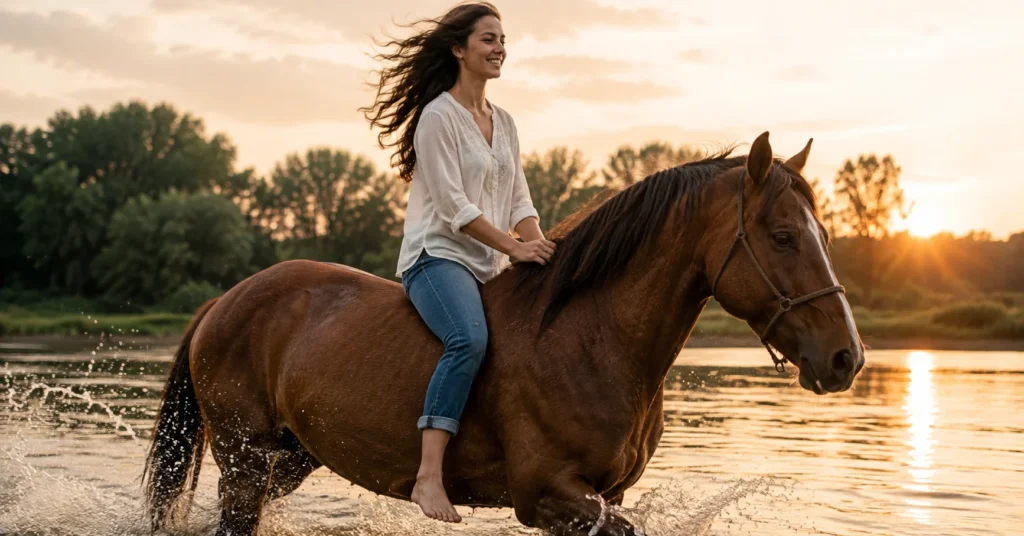
Horseback riding is one of the oldest and most rewarding outdoor activities, but not every rider begins with a saddle. Many people are curious about what it feels like to ride a horse bareback after seeing experienced riders make it look effortless. The close connection between horse and rider can seem exciting, natural, and even freeing. However, riding without a saddle requires more than confidence—it takes balance, preparation, and an understanding of both your own abilities and your horse’s comfort.
If you’re thinking about learning how to ride a horse bareback, it’s important to know that it isn’t simply “regular riding without a saddle.” The experience is completely different. Your posture, balance, communication, and even the horse’s movement feel more noticeable. While many experienced equestrians enjoy riding bareback for training or recreation, beginners should approach it carefully.
This guide explains everything you need to know before you ride a horse bareback, including the benefits, challenges, safety tips, common mistakes, and practical advice to help you enjoy the experience responsibly.
ALSO READ: Therapist For Emotionally Immature Parents: A Practical Guide
What Does It Mean To Ride A Horse Bareback?
Ride A Horse Bareback simply means sitting directly on the horse’s back without using a saddle. Some riders may still use a bareback pad for additional grip and comfort, but there is no rigid saddle supporting the rider.
Without a saddle, every movement of the horse becomes easier to feel. This closer contact helps many riders improve their balance and understand how a horse moves beneath them. At the same time, it removes the extra security and support that a saddle normally provides.
Bareback riding has been practiced for centuries. It remains popular among experienced riders who want to strengthen their seat, improve balance, or simply enjoy a more natural riding experience.
Is Bareback Riding Suitable For Beginners?
The answer depends on your riding experience and the horse you’re riding.
Complete beginners usually benefit from learning with a properly fitted saddle. Saddles provide stability, improve rider positioning, and make it easier to maintain balance while learning basic riding skills.
However, beginners with guidance from an experienced instructor may eventually practice short bareback sessions on a calm, well-trained horse. The goal should never be speed or showing off. Instead, it should focus on developing better balance and body awareness.
If you’ve only ridden a horse once or twice, it’s generally better to master basic riding techniques before attempting to ride a horse bareback.
Why Some Riders Love Bareback Riding
Many experienced equestrians enjoy Ride A Horse Bareback because it creates a closer connection with the horse.
Some of the biggest advantages include:
Improved Balance
Without a saddle holding you in position, your body naturally learns to maintain balance. Riders quickly become more aware of their posture and center of gravity.
Better Communication
Small shifts in body weight become easier for the horse to feel. Likewise, riders can better sense the horse’s movements and reactions.
Stronger Core Muscles
Ride A Horse Bareback requires greater use of your abdominal muscles, hips, lower back, and legs. Over time, many riders notice improvements in overall riding strength.
Increased Confidence
Learning to remain balanced without relying on a saddle often builds confidence that carries over into traditional riding.
A More Natural Feel
Many riders describe Ride A Horse Bareback as feeling more connected with the horse because there is less equipment between them.
Challenges Of Riding Bareback
While rewarding, Ride A Horse Bareback is not without its difficulties.
Less Stability
A saddle provides structure that helps keep riders secure. Without one, it’s easier to lose balance during sudden movements.
Greater Physical Effort
Your muscles work harder to maintain proper position. Even experienced riders may find longer rides more tiring.
Slippery Conditions
Sweaty horses, rain, or smooth coats can reduce grip, making it more difficult to stay balanced.
Increased Risk of Falling
Without stirrups or a saddle horn, recovering from unexpected movements becomes more challenging.
Understanding these challenges helps riders make smarter decisions before attempting Ride A Horse Bareback.
Choosing The Right Horse
Not every horse is suitable for Ride A Horse Bareback.
A good horse for beginners should be:
- Calm and predictable
- Well-trained
- Comfortable being ridden bareback
- Responsive to gentle cues
- Free from back pain or discomfort
Older school horses often make excellent choices because they’re accustomed to carrying inexperienced riders.
Avoid riding young, nervous, or highly energetic Ride A Horse Bareback until you have significant riding experience.
Wear The Right Clothing
Even though you aren’t using a saddle, proper riding equipment still matters.
Consider wearing:
- Riding helmet
- Long riding pants
- Riding boots with a small heel
- Comfortable fitted shirt
- Riding gloves if preferred
Avoid shorts because the friction against the horse’s back can quickly become uncomfortable.
A certified riding helmet remains one of the most important pieces of safety equipment, regardless of your experience.
Start In A Safe Environment
Your first Ride A Horse Bareback should never happen on a trail or open field.
Instead, choose:
- A fenced riding arena
- Soft footing
- Quiet surroundings
- Good weather
- An experienced person nearby
Controlled environments reduce distractions and make learning much safer.
Learn Proper Position First
Good posture makes Ride A Horse Bareback much easier.
Focus on:
Sitting Deep
Allow your hips to relax naturally instead of gripping tightly with your knees.
Looking Ahead
Keep your eyes forward rather than staring down at the horse.
Relaxing Your Legs
Avoid squeezing tightly. A relaxed leg helps improve balance.
Keeping Shoulders Back
Maintain a straight but relaxed posture.
Following the Horse’s Movement
Instead of resisting motion, allow your hips to move naturally with each step.
These small adjustments greatly improve comfort and stability.
Begin At The Walk
There’s no need to rush.
Start by allowing the horse to walk while you become familiar with the new feeling.
Walking helps you:
- Find your balance
- Relax your hips
- Learn the horse’s movement
- Build confidence
Only after becoming completely comfortable should you consider trying a slow trot under supervision.
Common Mistakes New Ride A Horse Bareback Make
Many first-time riders make similar errors.
Gripping Too Tightly
Tight legs actually make balancing harder.
Leaning Forward
Leaning too far forward shifts your weight and can make falling more likely.
Holding the Reins for Balance
Reins are for communication—not support.
Looking Down
Looking down affects posture and balance.
Riding Too Long
Ride A Horse Bareback uses muscles differently. Short sessions are often more productive than long rides.
Recognizing these mistakes early can make learning much easier.
How Ride A Horse Bareback Improves Your Riding Skills
Many riding instructors occasionally incorporate Ride A Horse Bareback lessons because they develop valuable skills.
Benefits include:
- Better independent seat
- Improved body awareness
- Stronger core muscles
- Softer hands
- Better timing with horse movement
- Increased confidence
These improvements often translate into better performance when riding with a saddle.
Is Bareback Riding Comfortable For The Horse?
Many people wonder whether horses enjoy bareback riding.
The answer depends on several factors.
A healthy horse carrying a balanced rider for a reasonable amount of time generally experiences no problems. However, riders who bounce excessively or distribute their weight unevenly may create pressure points.
A properly fitted saddle actually spreads weight more evenly across the horse’s back. That’s why long-distance riding is usually more comfortable with a well-fitted saddle.
Always pay attention to signs that your horse may be uncomfortable, including:
- Pinned ears
- Reluctance to move
- Tail swishing
- Back sensitivity
- Changes in behavior
Respecting the horse’s comfort should always come first.
Safety Tips Before You Ride A Horse Bareback
Following basic safety practices greatly reduces risk.
Remember to:
- Always wear a helmet.
- Choose a calm horse.
- Ride in a safe enclosed area.
- Warm up the horse first.
- Keep sessions short.
- Avoid slippery conditions.
- Never attempt bareback riding on unfamiliar horses.
- Ride with supervision if you’re inexperienced.
- Stay relaxed instead of becoming tense.
- Dismount if either you or the horse feels uncomfortable.
Safety should always be your highest priority.
Can You Jump Bareback?
While experienced riders sometimes jump small obstacles bareback, it is not recommended for beginners.
Jumping requires advanced balance, precise timing, and excellent control. Without a saddle, maintaining proper position becomes much more difficult.
If your goal is eventually to jump bareback, first develop strong riding skills using a saddle and receive instruction from an experienced coach.
How Long Should Your First Bareback Ride Be?
Your first ride doesn’t need to be long.
Many instructors recommend sessions lasting only:
- 10–15 minutes for beginners
- 20–30 minutes for intermediate riders
Short rides help prevent muscle fatigue while allowing you to build confidence gradually.
As your balance improves, you can slowly increase your riding time.
Should You Use A Bareback Pad?
Bareback pads are optional.
Unlike saddles, they don’t provide a rigid frame or stirrups. Instead, they offer:
- Extra grip
- Slight cushioning
- Reduced friction
- Greater comfort for both horse and rider
Many beginners find bareback pads helpful while still enjoying the closer connection compared to a traditional saddle.
Signs You’re Ready For Bareback Riding
You may be ready if you can:
- Maintain balance without relying heavily on stirrups.
- Sit comfortably through a walk and trot.
- Control the horse using gentle aids.
- Stay relaxed while riding.
- Mount and dismount safely.
- Understand basic horse behavior.
Building these skills first creates a much safer and more enjoyable experience.
When You Should Avoid Bareback Riding
There are times when bareback riding is not a good idea.
Avoid it if:
- You’re learning to ride for the first time.
- The horse is nervous or unpredictable.
- The weather makes conditions slippery.
- The horse has back soreness.
- You’re riding unfamiliar trails.
- You’re tired or lacking confidence.
Choosing the right day and the right horse makes a significant difference.
Final Thoughts
Choosing to ride a horse bareback can be an exciting step in your riding journey, but it’s one that deserves careful preparation. Although riding without a saddle creates a closer connection with the horse and helps improve balance, it also requires greater body control, awareness, and respect for safety.
Take your time, start with a calm and experienced horse, wear appropriate safety equipment, and practice in a controlled environment. Short, supervised sessions are the best way to build confidence while protecting both yourself and your horse.
Bareback riding isn’t about proving your skill—it’s about developing better balance, deeper communication with your horse, and becoming a more thoughtful rider. With patience and proper guidance, it can become one of the most rewarding experiences in horseback riding.
FAQs
What is bareback riding?
Bareback riding is riding a horse without using a traditional saddle, allowing the rider to sit directly on the horse’s back or on a simple bareback pad.
Is it harder to ride a horse bareback?
Yes. Bareback riding requires more balance, core strength, and body control because there is no saddle to provide additional support.
Can beginners ride a horse bareback?
Beginners can try short, supervised sessions on calm, trained horses after learning basic riding skills with a saddle.
Does bareback riding hurt the horse?
A balanced rider on a healthy horse usually won’t cause discomfort during short rides, but poor balance or long rides can place uneven pressure on the horse’s back.
Should I wear a helmet when riding bareback?
Absolutely. Wearing a certified riding helmet is strongly recommended every time you ride, whether using a saddle or riding bareback.
ALSO READ: Carrie Schenken: A Look At Her Life And Story

Elara Voss is a technology writer and immersive systems researcher at Argos.Vu, exploring the intersection of AI, virtual reality, and spatial computing. Her work focuses on how emerging technologies reshape the way we perceive, interact with, and understand information in the real world.
She writes about cutting-edge innovations, digital environments, and the future of human–technology interaction—translating complex ideas into engaging, forward-thinking insights.