
Have you ever watched a glider silently soar across the sky and wondered how it stays airborne without an engine? The world of air gliders is fascinating, combining the principles of flight, weather, and pilot skill into one exciting activity. Whether you are curious about recreational flying, considering learning to glide, or simply interested in aviation, understanding the basics of an air glider is the perfect place to start.
Unlike powered aircraft, gliders rely on natural air currents to remain in flight. This creates a unique flying experience that is often described as peaceful, efficient, and highly rewarding. From their aerodynamic design to the techniques pilots use to gain altitude, air gliders represent one of the purest forms of aviation.
we will explore everything you need to know about air gliders, including how they work, their history, different types, benefits, safety considerations, and tips for beginners.
ALSO READ: Understanding The Food Web Of A Temperate Deciduous Forest
What Is an Air Glider?
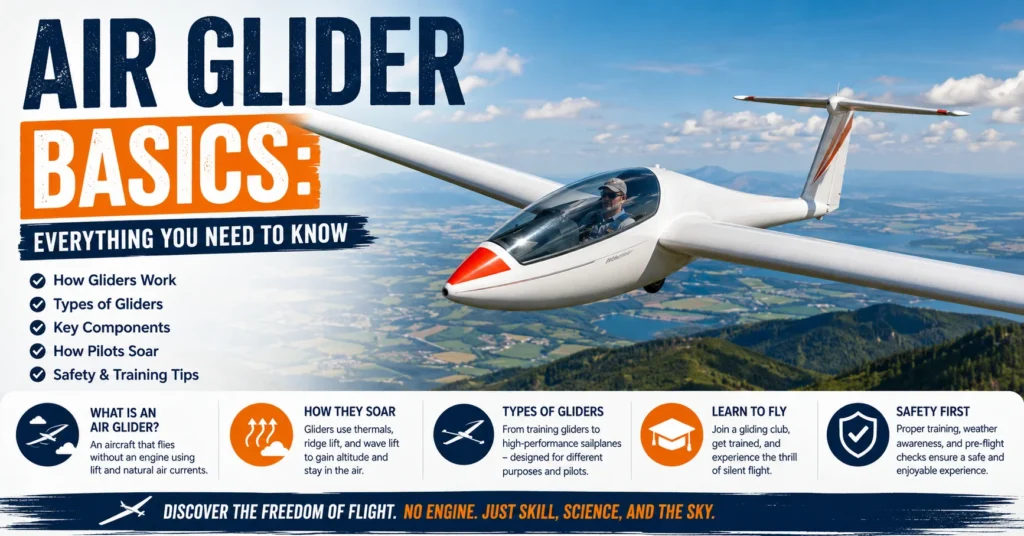
An air glider, commonly known simply as a glider or sailplane, is a type of aircraft designed to fly without a continuous source of engine power. Instead of relying on propulsion, it uses aerodynamic efficiency and naturally occurring air currents to stay aloft.
Gliders are built with long, narrow wings that generate significant lift while minimizing drag. This design allows them to travel long distances and remain airborne for hours under favorable weather conditions.
Pilots launch gliders using methods such as:
- Aerotow by another aircraft
- Winch launching
- Auto towing
- Self-launching systems in motorized gliders
Once airborne, the glider disconnects from its launch method and continues flying independently.
The History Of Air Gliders
The concept of gliding predates powered flight. Early aviation pioneers experimented extensively with unpowered aircraft to understand flight mechanics.
Early Experiments
During the late 19th century, inventors and aviation enthusiasts conducted numerous gliding experiments. These tests helped establish many of the principles that later made powered flight possible.
Influence on Modern Aviation
The research performed with gliders significantly influenced aircraft design. Many lessons learned about wing shape, stability, and control systems were later applied to airplanes.
Growth of Recreational Gliding
As aviation technology advanced, gliding evolved into a popular sport and recreational activity. Today, glider clubs and competitions exist worldwide, attracting enthusiasts of all ages.
How Does An Air Glider Work?
Understanding how an air glider works begins with understanding the four basic forces of flight:
Lift
Lift is the upward force generated by air flowing over the wings. The unique shape of a glider’s wings creates pressure differences that allow the aircraft to rise.
Weight
Weight is the force of gravity pulling the glider downward.
Drag
Drag is the resistance created as the glider moves through the air.
Thrust
Unlike powered aircraft, gliders do not generate ongoing thrust. Instead, they convert altitude into forward motion.
By carefully balancing these forces, a glider can remain airborne for extended periods.
The Role Of Air Currents
One of the most fascinating aspects of gliding is the use of natural air currents.
Thermal Currents
Thermals are columns of rising warm air created when the sun heats the Earth’s surface unevenly.
Glider pilots circle within these rising air masses to gain altitude without an engine.
Ridge Lift
Ridge lift occurs when wind is forced upward by hills or mountains.
Pilots can fly along these areas of rising air and maintain altitude for long periods.
Wave Lift
Mountain waves form when strong winds pass over mountain ranges, creating powerful upward-moving air.
Experienced pilots can use wave lift to reach remarkable altitudes.
Main Components Of An Air Glider
Although gliders vary in design, most include several key components.
Wings
The wings are the most important part of the aircraft. Their long span helps maximize lift and improve efficiency.
Fuselage
The fuselage is the central body of the glider and houses the cockpit.
Cockpit
The cockpit contains the controls, instruments, and seating for the pilot.
Tail Assembly
The tail provides stability and control during flight.
Landing Gear
Most gliders use a single-wheel landing gear system, though some models have additional support wheels.
Types Of Air Gliders
Several types of air gliders are available, each designed for specific purposes.
Sailplanes
Sailplanes are the most common type of glider. They are optimized for long-distance soaring and maximum efficiency.
Training Gliders
Training gliders are designed for student pilots and often feature dual seating for instructor supervision.
Motor Gliders
Motor gliders combine gliding capabilities with a small engine. Pilots can use the engine when needed and shut it down during soaring flight.
High-Performance Competition Gliders
These advanced gliders are built for speed, distance, and competitive soaring events.
Why People Love Gliding
Gliding offers numerous benefits that attract aviation enthusiasts around the world.
A Unique Flying Experience
Flying without engine noise creates an exceptionally peaceful experience.
Pilots often describe gliding as feeling more connected to nature and the atmosphere.
Cost-Effective Aviation
Compared to operating powered aircraft, gliding can be more affordable.
Fuel expenses are lower, and maintenance requirements are often reduced.
Environmental Benefits
Since traditional gliders operate without continuous engine power, they produce minimal emissions during flight.
Skill Development
Gliding enhances a pilot’s understanding of weather, aerodynamics, navigation, and flight planning.
Learning To Fly An Air Glider
Many people assume learning to glide is difficult, but proper training makes the process accessible.
Join a Gliding Club
Most beginners start by joining a local gliding club.
Clubs provide:
- Aircraft access
- Flight instruction
- Safety training
- Community support
Ground School
Students first learn aviation fundamentals, including:
- Flight principles
- Meteorology
- Navigation
- Safety procedures
- Airspace regulations
Flight Training
Practical training introduces students to:
- Takeoffs and launches
- Basic maneuvers
- Turns and climbs
- Landing techniques
- Emergency procedures
Solo Flight
After demonstrating sufficient skill and knowledge, students complete their first solo flight, which is often considered a major milestone.
Essential Instruments In An Air Glider
Despite their simplicity, modern gliders use sophisticated instruments.
Altimeter
Measures altitude above sea level.
Variometer
One of the most important glider instruments, the variometer indicates whether the aircraft is climbing or descending.
Airspeed Indicator
Displays the glider’s speed through the air.
Compass
Helps maintain directional awareness.
GPS Systems
Modern gliders frequently use GPS technology for navigation and flight planning.
Safety In Gliding
Safety is a top priority in all aviation activities, including gliding.
Pre-Flight Inspections
Pilots carefully inspect aircraft components before every flight.
Weather Assessment
Understanding weather conditions is critical.
Pilots evaluate:
- Wind speed
- Cloud formations
- Thermal activity
- Visibility
- Storm potential
Emergency Training
Students practice emergency procedures regularly.
These may include:
- Rope breaks
- Off-airport landings
- Equipment failures
- Unexpected weather changes
Continuous Education
Experienced pilots continually update their skills through training and safety seminars.
Air Glider Competitions
Competitive gliding is a popular sport worldwide.
Cross-Country Racing
Pilots attempt to complete designated courses in the shortest possible time.
Distance Challenges
Competitors aim to cover the greatest distance during a flight.
Speed Competitions
Events measure average speed over predetermined routes.
International Championships
Elite pilots participate in prestigious competitions that showcase advanced soaring skills.
Air Glider Maintenance
Proper maintenance is essential for performance and safety.
Routine Inspections
Aircraft undergo regular inspections to identify wear or damage.
Cleaning and Storage
Keeping surfaces clean helps maintain aerodynamic efficiency.
Gliders are often stored in hangars to protect them from weather exposure.
Component Checks
Critical systems such as controls, landing gear, and instruments receive periodic evaluation.
Common Myths About Air Gliders
Many misconceptions exist about gliding.
Gliders Simply Fall Slowly
In reality, gliders actively generate lift and can remain airborne for hours using rising air currents.
Gliding Is Dangerous
When conducted properly with training and safety procedures, gliding has a strong safety culture and well-established standards.
Gliders Cannot Travel Far
Modern sailplanes can travel hundreds of miles during a single flight under favorable conditions.
Gliding Is Only for Experts
Many beginners successfully learn gliding through structured training programs.
Future Of Air Gliding
Technological advancements continue to improve gliding.
Modern developments include:
- Advanced composite materials
- Improved aerodynamics
- Enhanced navigation systems
- Electric self-launching capabilities
- More efficient flight computers
These innovations make gliding safer, more efficient, and more accessible than ever before.
Tips For New Air Glider Enthusiasts
If you are interested in getting started, consider the following tips:
Learn the Basics
Study flight principles and aviation terminology before your first lesson.
Observe Experienced Pilots
Watching skilled pilots can accelerate learning.
Be Patient
Mastering gliding takes time and practice.
Understand Weather
Weather knowledge is one of the most valuable skills a glider pilot can develop.
Focus on Safety
Always follow established procedures and instructor guidance.
Conclusion
Air gliders offer one of the most fascinating and rewarding experiences in aviation. By relying on aerodynamic design and natural air currents instead of continuous engine power, gliders demonstrate the beauty and efficiency of flight in its purest form. Whether you are interested in recreational soaring, competitive gliding, or simply understanding how these remarkable aircraft operate, learning the fundamentals provides valuable insight into the science and art of aviation.
From understanding lift and thermals to exploring different glider types and safety practices, the world of gliding is both educational and exciting. As technology continues to advance, air gliding remains a timeless activity that combines skill, adventure, and a deep appreciation for the skies.
FAQs
What is an air glider?
An air glider is an aircraft designed to fly without continuous engine power, using lift and natural air currents to stay airborne.
How long can a glider stay in the air?
Under favorable weather conditions, a glider can remain airborne for several hours by using thermals, ridge lift, and wave lift.
Do gliders have engines?
Most traditional gliders do not have engines, although some motor gliders include small engines for launching or extended flight.
Is learning to fly a glider difficult?
With proper instruction and practice, most people can learn gliding through structured training programs and supervised flights.
Are gliders environmentally friendly?
Yes, gliders are generally considered environmentally friendly because they operate with little or no fuel consumption during normal soaring flight.
ALSO READ: 222 Twin Flame: What This Powerful Number Means

Elara Voss is a technology writer and immersive systems researcher at Argos.Vu, exploring the intersection of AI, virtual reality, and spatial computing. Her work focuses on how emerging technologies reshape the way we perceive, interact with, and understand information in the real world.
She writes about cutting-edge innovations, digital environments, and the future of human–technology interaction—translating complex ideas into engaging, forward-thinking insights.