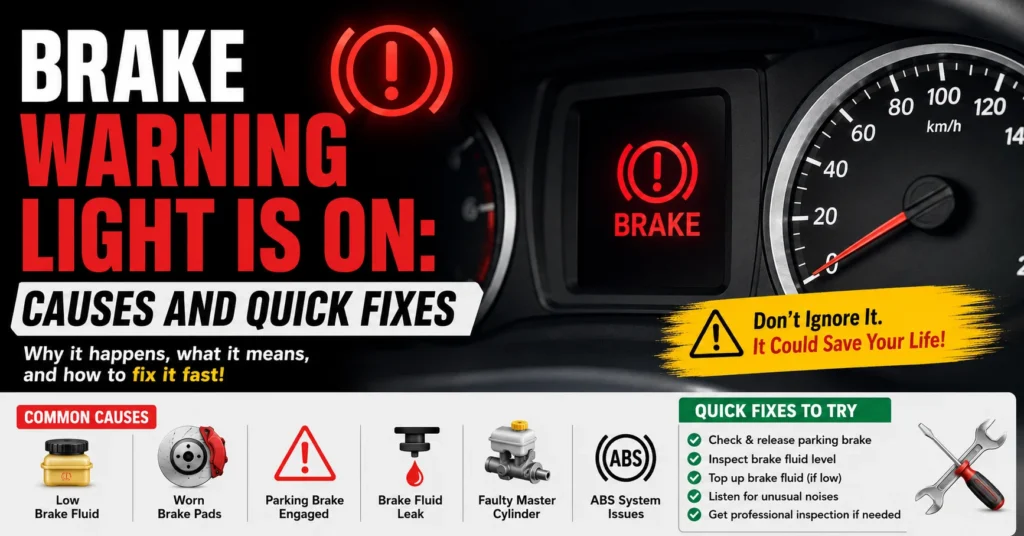
If your brake warning light is on, don’t ignore it. That small red or amber light on your dashboard could be warning you about something as simple as a low brake fluid level—or something as serious as a failing braking system. Since your brakes are the most important safety feature on your vehicle, understanding what this warning means can help you prevent expensive repairs and, more importantly, stay safe on the road.
we’ll explain why the Brake Warning Light Is On what you should do immediately, how to diagnose the issue, and when it’s safe to continue driving. Whether you’re dealing with a flashing brake light or a warning that won’t turn off, this article will help you understand the possible causes and the best solutions.
ALSO READ: Carbon Tint vs Ceramic: Which Window Tint Is Better?
What Does The Brake Warning Light Is On Mean?
The Brake Warning Light Is On is designed to alert you when your vehicle detects a problem with the braking system. Depending on your vehicle, the warning may appear as:
- A red circle with an exclamation mark (!)
- The word “BRAKE”
- A red “P” inside a circle
- An amber brake system warning
Some vehicles also display a message on the dashboard explaining the issue.
The light can indicate a minor problem or a serious safety concern. That’s why you should never ignore it.
Common Reasons The Brake Warning Light Is On
Several issues can trigger the Brake Warning Light Is On.
Parking Brake Is Still Engaged
The most common and easiest fix is a partially engaged parking brake.
Even if the parking brake is only slightly applied, the warning light may remain illuminated.
Quick Fix
- Fully release the parking brake.
- Check whether the warning light turns off.
- If it stays on, another issue is likely causing the warning.
Low Brake Fluid
Brake fluid transfers pressure from the brake pedal to the brake components. If the fluid level drops below the recommended level, the warning light will activate.
Low brake fluid may happen because of:
- Normal brake pad wear
- Small leaks
- Damaged brake lines
- Worn seals
Signs of Low Brake Fluid
- Soft brake pedal
- Longer stopping distance
- Brake warning light stays on
- Fluid visible under the vehicle
Quick Fix
Park on level ground.
Locate the brake fluid reservoir.
Check the fluid level.
Add the correct type of brake fluid if it’s low.
Inspect for leaks before driving regularly.
Worn Brake Pads
Brake pads naturally wear over time.
As they become thinner, the brake fluid level may decrease slightly, triggering the warning light. Many modern vehicles also have brake pad wear sensors.
Symptoms
- Squealing noises
- Grinding sounds
- Vibrations during braking
- Reduced braking performance
Replacing worn brake pads early prevents damage to the brake rotors.
Brake Fluid Leak
A brake fluid leak is one of the most dangerous causes of the warning light.
Leaks may occur in:
- Brake hoses
- Brake lines
- Master cylinder
- Calipers
- Wheel cylinders
Warning Signs
- Fluid puddles beneath the car
- Brake pedal feels soft
- Vehicle pulls while braking
- Poor stopping performance
If you suspect a leak, avoid driving until repairs are completed.
Faulty Brake Master Cylinder
The master cylinder generates hydraulic pressure for your braking system.
If it fails, braking performance can become unpredictable.
Common Symptoms
- Brake warning light remains on
- Brake pedal sinks slowly
- Fluid leaks near the master cylinder
- Reduced stopping power
A faulty master cylinder should be repaired immediately.
ABS System Problems
Many vehicles have both a Brake Warning Light Is On and an ABS warning light.
If both lights appear together, there may be a problem with:
- ABS wheel speed sensors
- ABS control module
- Hydraulic pump
- Wiring
While standard braking usually still works, anti-lock braking may be disabled.
Brake Sensor Failure
Modern vehicles rely on multiple sensors.
If one fails, it may trigger the Brake Warning Light Is On even when the braking system is functioning correctly.
Possible faulty sensors include:
- Brake fluid level sensor
- Parking brake switch
- Brake pressure sensor
- Wheel speed sensor
A diagnostic scan can identify the faulty component.
Electrical Issues
Electrical problems sometimes activate the warning light.
Examples include:
- Loose wiring
- Corroded connectors
- Blown fuses
- Faulty instrument cluster
These issues usually require electrical troubleshooting.
What To Do Immediately If The Brake Warning Light Is On
Follow these steps if the warning light appears while driving.
Stay Calm
Avoid sudden braking or panic.
Check the Parking Brake
Make sure it is completely released.
Observe Brake Performance
Ask yourself:
- Does the brake pedal feel normal?
- Is stopping distance longer?
- Does the vehicle pull to one side?
If braking feels unusual, stop driving.
Pull Over Safely
If you notice poor braking performance, pull over as soon as it is safe.
Check Brake Fluid
If possible:
- Open the hood.
- Inspect the brake fluid reservoir.
- Look for leaks.
Decide Whether to Drive
Only continue driving if:
- Brakes feel completely normal.
- The warning disappears.
- Fluid level is correct.
Otherwise, have the vehicle inspected.
Can You Drive With The Brake Warning Light On?
It depends on the cause.
Usually Safe
- Parking brake partially engaged
- Temporary sensor issue
Potentially Unsafe
- Low brake fluid
- Worn brake pads
- Brake fluid leak
- Master cylinder failure
- Hydraulic system problems
If the brake pedal feels soft or braking performance changes, do not continue driving.
Brake Warning Light vs ABS Light
Many drivers confuse these warning lights.
| Brake Warning Light | ABS Warning Light |
|---|---|
| Indicates a general brake system issue | Indicates an anti-lock braking system issue |
| Often red | Usually amber |
| May indicate low brake fluid | Usually caused by sensor or module faults |
| Requires immediate attention | Still important but often less urgent |
If both lights illuminate together, have the vehicle inspected immediately.
How Mechanics Diagnose Brake Warning Light Problems
Professional technicians usually follow these steps:
Visual Inspection
They inspect:
- Brake pads
- Rotors
- Brake hoses
- Brake lines
- Brake fluid level
Scan Diagnostic Codes
Modern vehicles store fault codes that identify system problems.
Hydraulic Pressure Testing
Pressure testing checks for leaks or master cylinder issues.
Sensor Testing
Technicians inspect:
- Brake switches
- Fluid sensors
- ABS sensors
DIY Checks Before Visiting A Mechanic
You can safely inspect several items.
Inspect Brake Fluid
Look for:
- Low level
- Dirty fluid
- Leaks
Check Parking Brake
Ensure it fully releases.
Listen for Brake Noise
Pay attention to:
- Grinding
- Squealing
- Scraping
Observe Dashboard Lights
Note whether:
- ABS light is also on
- Check Engine light appears
- Stability control light appears
These clues help narrow down the issue.
How Much Does Brake Warning Light Repair Cost?
Costs vary depending on the problem.
| Repair | Estimated Cost |
|---|---|
| Brake fluid top-up | $10–$30 |
| Brake fluid flush | $80–$150 |
| Brake pads | $150–$350 |
| Brake rotors | $250–$600 |
| Brake line repair | $150–$500 |
| Master cylinder replacement | $300–$900 |
| ABS sensor replacement | $100–$300 |
Repair prices vary by vehicle model and location.
Preventing Brake Warning Light Problems
Regular maintenance helps prevent unexpected brake issues.
Follow These Tips
- Check brake fluid every few months.
- Replace brake fluid according to your owner’s manual.
- Listen for unusual brake noises.
- Replace brake pads before they’re completely worn.
- Inspect brake lines annually.
- Have the braking system checked during routine servicing.
Preventive maintenance is usually much cheaper than emergency repairs.
Final Thoughts
Seeing the brake warning light is on can be alarming, but it should never be ignored. While the cause may be something simple like a partially engaged parking brake or low brake fluid, it can also signal serious issues such as worn brake components, hydraulic leaks, or a failing master cylinder.
The safest approach is to inspect the obvious causes first, avoid driving if your brakes don’t feel normal, and arrange for a professional inspection whenever you’re unsure. Regular brake maintenance, routine fluid checks, and prompt repairs will help keep your braking system reliable and ensure you stay safe every time you get behind the wheel.
FAQs
Why is my brake warning light on but the brakes work fine?
The warning may indicate low brake fluid, a parking brake issue, or a faulty sensor. Even if braking feels normal, the system should still be inspected.
Can low brake fluid cause the brake warning light?
Yes. Low brake fluid is one of the most common reasons the brake warning light comes on.
Is it safe to drive if only the brake warning light is on?
Only if the brakes feel completely normal and the issue is clearly identified, such as the parking brake being engaged. Otherwise, have the vehicle inspected immediately.
Why are both the brake light and ABS light on?
This usually indicates a problem affecting both the braking system and the anti-lock braking system, such as low brake fluid or a failed ABS component.
Will the brake warning light reset itself?
If the underlying issue is fixed, the warning light often turns off automatically. Some vehicles may require the fault codes to be cleared using a diagnostic scanner.
ALSO READ: Posh Nosh Dog Food: A Complete Guide For Pet Owners

Elara Voss is a technology writer and immersive systems researcher at Argos.Vu, exploring the intersection of AI, virtual reality, and spatial computing. Her work focuses on how emerging technologies reshape the way we perceive, interact with, and understand information in the real world.
She writes about cutting-edge innovations, digital environments, and the future of human–technology interaction—translating complex ideas into engaging, forward-thinking insights.