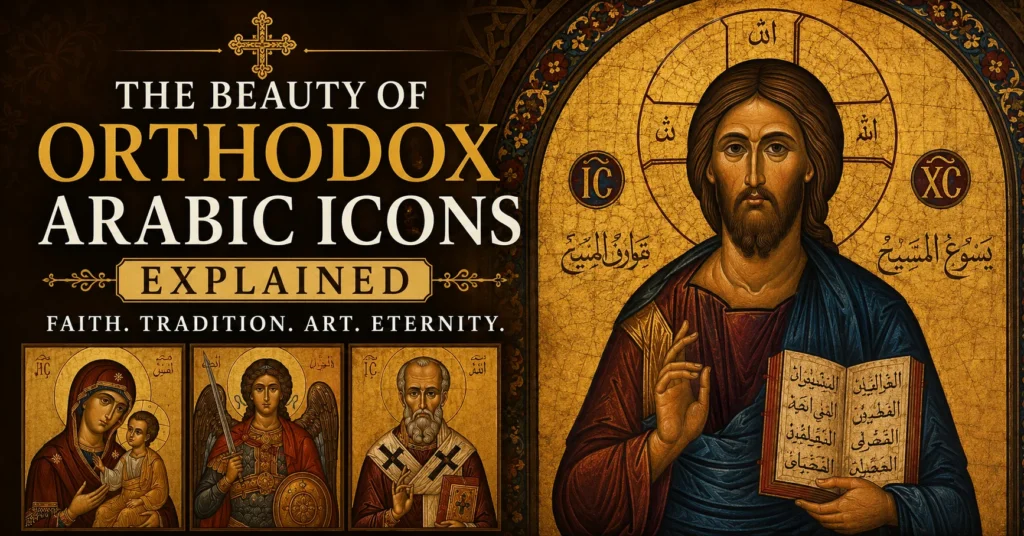
Orthodox Arabic icons are far more than beautiful religious paintings. They represent centuries of faith, culture, artistry, and spiritual reflection. Whether displayed in churches, monasteries, or family homes, these sacred images hold deep meaning for Orthodox Christians across the Middle East and beyond.
Many people admire Orthodox Arabic icons for their rich colors and intricate details, but their true beauty lies in the stories they tell. Every line, color, and symbol has a purpose, inviting believers into prayer and reminding them of God’s presence. Unlike ordinary artwork, these icons are created to inspire contemplation rather than simply decorate a space.
In today’s world, where digital images dominate our lives, Orthodox Arabic icons continue to preserve ancient traditions while connecting modern generations to their spiritual heritage. This article explores their history, symbolism, artistic techniques, cultural importance, and the reasons they remain treasured around the world.
ALSO READ: Do Curly Hair Conditioners Work For Every Curl Type?
Understanding Orthodox Arabic Icons
Orthodox Arabic icons are sacred images used primarily within Arabic-speaking Orthodox Christian communities, including those belonging to the Greek Orthodox, Antiochian Orthodox, and other Eastern Orthodox traditions.
Unlike modern paintings that focus on realism, Orthodox icons emphasize spiritual truth. They are carefully designed according to centuries-old traditions rather than the personal style of an artist.
These icons commonly depict:
- Jesus Christ
- The Virgin Mary
- Angels
- Saints
- Biblical events
- Important moments from Christian history
The purpose of an icon is not worship. Instead, it serves as a visual reminder of faith and a window into the heavenly kingdom. Believers honor the person represented in the icon, not the wood or paint itself.
The Historical Origins Of Orthodox Arabic Icons
The story of Orthodox Arabic icons begins in the earliest centuries of Christianity. As Christianity spread throughout the Middle East, local artists began creating sacred images that reflected both Orthodox theology and regional artistic traditions.
Cities such as Jerusalem, Antioch, Damascus, and Alexandria became important centers for icon production. These regions developed their own artistic identity while remaining faithful to traditional Byzantine iconography.
Over time, Arabic inscriptions replaced or accompanied Greek writing, making the icons more accessible to local Christian communities.
Despite political changes, wars, and shifting empires, Orthodox Arabic iconography survived because churches, monasteries, and families carefully preserved these sacred works for future generations.
Many icons that exist today are inspired by artistic methods developed over one thousand years ago.
Why Orthodox Arabic Icons Look Different From Ordinary Paintings
One of the first things people notice is that Orthodox Arabic icons look very different from Western religious art.
This difference is intentional.
Instead of trying to recreate the physical world, iconographers aim to reveal spiritual reality.
Some distinctive characteristics include:
Calm Facial Expressions
Saints often appear peaceful rather than emotional. This symbolizes inner holiness and eternal peace.
Large Eyes
Eyes are intentionally larger because they represent spiritual vision and wisdom.
Small Mouths
A smaller mouth reflects restraint, humility, and careful speech.
Thin Nose
The nose is often narrow to symbolize spiritual rather than physical focus.
Golden Backgrounds
Gold represents heavenly light and God’s eternal kingdom rather than earthly surroundings.
These artistic choices remind viewers that icons point toward divine truth rather than everyday life.
The Deep Symbolism Behind Every Orthodox Arabic Icon
Every Orthodox Arabic icon communicates theology through symbolism.
Nothing is accidental.
Gold
Gold symbolizes eternal light, heaven, and God’s glory.
Blue
Blue often represents divinity, mystery, and heaven.
Red
Red signifies sacrifice, divine love, martyrdom, and the life-giving blood of Christ.
White
White symbolizes purity, resurrection, holiness, and victory over death.
Green
Green frequently represents life, hope, and spiritual renewal.
Even the posture of each figure carries meaning. Raised hands often symbolize prayer, while a blessing gesture reflects Christ’s authority and divine grace.
Arabic Language In Orthodox Icons
A defining feature of Orthodox Arabic icons is the presence of Arabic inscriptions.
Names of Christ, the Virgin Mary, saints, and biblical events are often written in elegant Arabic calligraphy.
These inscriptions serve several purposes:
- Identify the holy figure
- Preserve religious tradition
- Help worshippers understand the scene
- Connect faith with local language and culture
Arabic script itself becomes part of the icon’s artistic beauty, blending visual elegance with spiritual meaning.
The Spiritual Purpose Of Orthodox Arabic Icons
Orthodox Arabic icons are created primarily for prayer.
Many Orthodox Christians spend quiet moments before an icon while reading Scripture, praying, or reflecting on God’s presence.
Icons encourage believers to:
- Focus during prayer
- Remember biblical teachings
- Reflect on the lives of saints
- Develop spiritual discipline
- Feel connected to the larger Christian tradition
Rather than distracting worshippers, icons help direct attention toward God.
This explains why Orthodox churches are filled with carefully arranged icons that create an atmosphere of reverence.
How Orthodox Arabic Icons Are Traditionally Made
Creating an Orthodox Arabic icon is considered both an artistic and spiritual practice.
Many iconographers prepare themselves through prayer before beginning their work.
The traditional process includes several careful steps.
Preparing the Wooden Panel
Most icons begin with a carefully selected wooden board.
The surface is treated with layers of natural gesso to create a smooth painting area.
Sketching the Image
The design follows established iconographic patterns that have been preserved for centuries.
Artists rarely invent completely new compositions.
Applying Gold Leaf
Real gold leaf is often added before painting to symbolize heavenly glory.
Layering Natural Pigments
Multiple thin layers of mineral or earth pigments create rich colors and lasting durability.
Adding Fine Details
Facial features, clothing, and inscriptions are completed with remarkable precision.
Final Blessing
In many Orthodox traditions, completed icons are blessed before being placed in churches or homes.
This process reflects the belief that icon writing is both craftsmanship and prayer.
Famous Subjects Found In Orthodox Arabic Icons
Although countless saints appear in Orthodox iconography, several subjects are especially common.
Christ Pantocrator
This image portrays Christ as the ruler of the universe.
He typically holds the Gospel while raising one hand in blessing.
The Virgin Mary
Many icons honor Mary as the Mother of God.
She is frequently shown holding the infant Jesus while directing attention toward Him.
Saint George
Saint George remains one of the most beloved saints throughout the Middle East.
His famous image defeating the dragon symbolizes victory over evil.
Saint Nicholas
Known for generosity and compassion, Saint Nicholas appears in churches throughout the Orthodox world.
The Archangel Michael
Michael represents heavenly protection and God’s triumph over darkness.
These familiar images help preserve important biblical teachings and Christian traditions.
The Role Of Icons Inside Orthodox Churches
Orthodox churches are filled with sacred imagery.
Every icon has a specific location and purpose.
One of the most important features is the iconostasis, a decorated wall covered with icons that separates the sanctuary from the main worship area.
The arrangement follows a meaningful order.
Common placements include:
- Christ at the center
- The Virgin Mary beside Christ
- Patron saints
- Archangels
- Apostles
- Major feast scenes
Together, these icons create a visual representation of salvation history.
For worshippers, walking into an Orthodox church feels like entering a space where heaven and earth meet.
Orthodox Arabic Icons In Family Homes
Icons are not limited to churches.
Many Orthodox families create a prayer corner within their homes.
This small sacred space often includes:
- An icon of Christ
- An icon of the Virgin Mary
- Family patron saints
- A Bible
- Candles
- Incense
Daily prayers before these icons help strengthen family faith and preserve religious traditions across generations.
Children often grow up recognizing these sacred images long before they can read.
How Orthodox Arabic Icons Preserve Cultural Identity
Orthodox Arabic icons are valuable cultural treasures as well as religious objects.
For many Middle Eastern Christian communities, these icons preserve centuries of language, customs, and artistic heritage.
Even during difficult historical periods, icons helped communities maintain their identity.
Today they continue to represent:
- Christian history in the Middle East
- Arabic artistic traditions
- Local craftsmanship
- Religious continuity
- Cultural resilience
Museums, churches, and collectors now recognize Orthodox Arabic icons as important pieces of world heritage.
Modern Interest In Orthodox Arabic Icons
Interest in Orthodox Arabic icons has grown significantly over recent years.
People from many backgrounds appreciate them for different reasons.
Some admire their artistic beauty.
Others study their historical importance.
Many Christians purchase icons to strengthen their prayer life.
Collectors value antique icons because of their craftsmanship and historical significance.
Meanwhile, modern iconographers continue producing new works using traditional techniques, ensuring that this ancient art form remains alive.
Common Misunderstandings About Orthodox Arabic Icons
Several misconceptions surround Orthodox iconography.
Understanding these helps appreciate their true purpose.
Icons Are Not Worshipped
Orthodox Christians worship God alone.
Icons receive honor because they point toward Christ and His saints.
Icons Are Not Decorative Paintings
Although beautiful, their primary purpose is spiritual rather than decorative.
Every Detail Has Meaning
Nothing in an icon is random.
Colors, gestures, clothing, backgrounds, and inscriptions all communicate theological truths.
Icons Follow Tradition
Unlike many modern paintings, iconographers usually follow established patterns that have been preserved for centuries.
What Makes Orthodox Arabic Icons So Beautiful?
Their beauty comes from much more than artistic skill.
Several qualities contribute to their timeless appeal.
Spiritual Depth
Icons invite quiet reflection rather than emotional excitement.
Rich Symbolism
Every color and gesture carries profound meaning.
Timeless Design
Ancient artistic traditions give icons a sense of permanence.
Exceptional Craftsmanship
Traditional methods require patience, precision, and dedication.
Cultural Heritage
Orthodox Arabic icons preserve the history of Christian communities throughout the Middle East.
This combination of faith, symbolism, and artistry creates a unique beauty that continues to inspire believers and art lovers alike.
Tips For Appreciating Orthodox Arabic Icons
If you’re new to Orthodox iconography, a thoughtful approach can deepen your appreciation.
Take time to observe carefully instead of rushing.
Notice the facial expressions and body language.
Pay attention to the colors and what they symbolize.
Read the inscriptions whenever possible.
Learn about the biblical story or saint represented.
Remember that icons are meant to encourage reflection rather than simply impress viewers with artistic realism.
The more you understand their symbolism, the more meaningful they become.
Why Orthodox Arabic Icons Continue To Inspire The World
Despite changing artistic trends, Orthodox Arabic icons remain remarkably relevant.
Their timeless message of hope, faith, sacrifice, and divine love continues to resonate across cultures.
In an age filled with rapidly changing technology and visual overload, these sacred images invite people to slow down, reflect, and reconnect with something eternal.
Whether displayed inside an ancient monastery, a modern church, or a family prayer corner, Orthodox Arabic icons continue to bridge generations while preserving one of Christianity’s richest artistic traditions.
Their enduring beauty reminds us that true art can nourish both the eyes and the soul.
Conclusion
The beauty of Orthodox Arabic icons extends far beyond their striking appearance. They are sacred expressions of faith, carefully crafted through centuries of tradition and rich with spiritual symbolism. Every icon tells a story, teaches biblical truth, and invites quiet reflection through its colors, gestures, and timeless design.
From the churches of the Middle East to homes around the world, Orthodox Arabic icons continue to preserve history, strengthen faith, and celebrate an enduring cultural heritage. Whether admired for their artistic excellence or their profound spiritual meaning, these icons remain powerful reminders of devotion, hope, and the lasting connection between heaven and earth.
FAQs
What is an Orthodox Arabic icon?
An Orthodox Arabic icon is a sacred Christian image created within Arabic-speaking Orthodox traditions. It depicts Christ, the Virgin Mary, saints, angels, or biblical events and is used to support prayer, worship, and spiritual reflection.
Why do Orthodox Arabic icons use gold backgrounds?
Gold backgrounds symbolize God’s eternal light, heavenly glory, and the timeless nature of the Kingdom of Heaven rather than a physical setting.
Are Orthodox Arabic icons only found in churches?
No. While they are central to Orthodox churches, many families also keep icons in their homes as part of a personal prayer space.
Why do people honor Orthodox Arabic icons?
Believers honor the holy person represented in the icon, not the physical object itself. Icons serve as visual reminders that help focus prayer and devotion.
What makes Orthodox Arabic icons unique?
Their combination of ancient artistic traditions, Arabic inscriptions, deep spiritual symbolism, and carefully preserved iconographic techniques makes them unique among Christian religious art.
ALSO READ: The Ugly Wife Of The Shady Duke: A Complete Guide

Elara Voss is a technology writer and immersive systems researcher at Argos.Vu, exploring the intersection of AI, virtual reality, and spatial computing. Her work focuses on how emerging technologies reshape the way we perceive, interact with, and understand information in the real world.
She writes about cutting-edge innovations, digital environments, and the future of human–technology interaction—translating complex ideas into engaging, forward-thinking insights.